Trust in Institutions
The study found that seventy-two percent of voters say large corporations have real influence over what happens in Washington, while only 34% trust them to act in the best interest of the American public, and even that level of trust is precarious, with only 6% who have a great deal of trust in large corporations and business leaders. Sixty-six percent say tech and AI companies have real influence and 38% trust them, whereas 73% say Congress has real influence and 36% trust it.
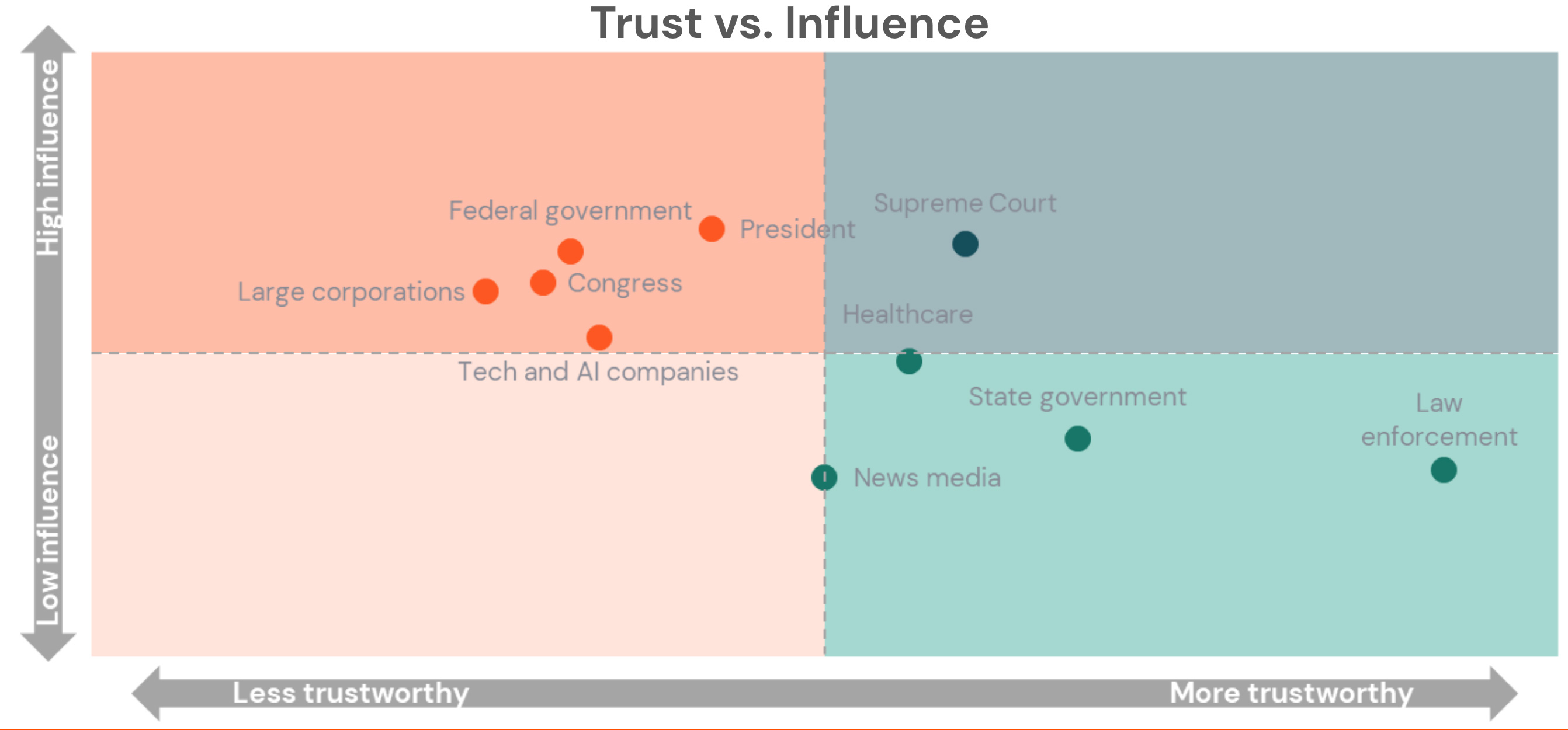
Five of the ten institutions tested fall in the high-influence, low-trust quadrant (the President, Congress, the federal government, large corporations, and tech/AI companies). Voters see these institutions as powerful but don’t extend the trust that power would require. The Supreme Court is the only institution above the line on both measures of trust and confidence, and it clears trust by only a slim margin.
2026 Midterms
Voters expect Democratic gains. Forty-six percent expect the midterms to shift power toward Democrats, 24% toward Republicans, and 18% expect no change in the balance of power. When asked for the bigger reason a candidate who challenges their own party’s leadership wins a primary, 40% of voters said it was because voters want new leadership and change, regardless of specific policies.
Voters expect a shift toward Democrats in the midterms and are open to leadership change, a combination that suggests an electorate looking for a break from the status quo more than a commitment to any one party’s agenda.
Building public trust requires transparency about who is in control and independent oversight. As Election Day nears, these issue areas are increasingly relevant to both companies and candidates. Power Shift will track movement on these measures in future surveys, starting with the post-midterm survey in November. Our next survey fields after the election and re-asks these questions.