














































Message Received: How Mamdani Flipped the Script
Published: July 7, 2025
Hi Friends,
Every week of 2025 has been more and more extraordinary. This past week has sadly been extraordinarily tragic. Our hearts are with the families who lost loved ones in the Texas floods. If you're looking for ways to help, we encourage you to support GoFundMe.org’s Texas Flood Relief Fund to get resources directly to impacted individuals, families, and local organizations.
At the same time, the headlines have kept coming—from hyperlocal primary races to sweeping federal budget battles. In this edition, we’re tracking where public sentiment is headed, how narratives are taking shape online, and what it all means for communicators working to build trust and drive change.
How Mamdani Flipped the Script
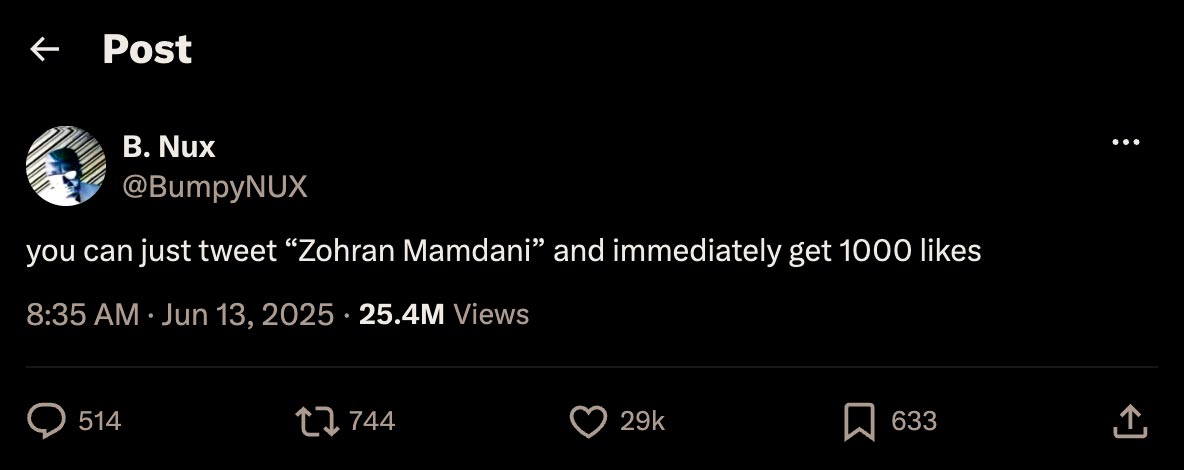
Last week, Assemblymember Zohran Mamdani won in one of New York’s most closely watched Democratic primaries. His campaign became a national story about local organizing, message discipline, and coalition power.
Most expected former Governor Andrew Cuomo to win. Instead, Mamdani surged in the final stretch through meme-forward messaging and youth activism, boosted by ranked-choice dynamics.
His rise sparked backlash, especially from conservative and Islamophobic voices, which then fueled fierce pushback from supporters. Social platforms became a battleground where identity, cultural symbolism, and next-generation political organizing collided.
How social media shaped his momentum:
- Viral moments and youth engagement. Mamdani talked about rising food prices using the term “halalflation” and promoted his rent freeze plan by jumping into the ocean in a full suit and tie.
- Progressive momentum and poll shifts. Reddit forums like r/nyc and r/politics buzzed with polling shifts, fueling enthusiasm among left-leaning voters. Discussions about ranked-choice voting also helped normalize participation.
- Backlash and online polarization. Conservative figures like Trump and Laura Loomer called Mamdani a “100% communist lunatic.” That backlash prompted centrist and progressive voices to rally around him.
- Influencer amplification. Progressive creators with large followings framed Mamdani as a bold, solutions-driven candidate. Meanwhile, some centrist pundits expressed concern about the tone of the discourse, particularly around race and identity.
Big Bill, Big Backlash
After hours of floor debate and a record-breaking speech from Minority Leader Hakeem Jeffries, Congress passed the “One Big Beautiful Bill”, a sweeping package of Trump’s domestic priorities with consequences that could reshape the country for decades to come.
The bill is unpopular with most voters, and polling shows it could create real vulnerabilities for Republicans outside the MAGA base.
Polls show consistent opposition:
- 29% Support - 55% Oppose (Quinnipiac University poll conducted June 22-24, 2025 among 979 registered voters nationwide).
- 33% Support - 48% Oppose (Navigator poll conducted June 26-30, 2025 among 1,375 U.S. adults).
What the data tells us:
- Support is sharply divided by party. MAGA Republicans back the bill overwhelmingly. Non-MAGA Republicans are mostly opposed.
- A majority of Americans believe the bill will hurt them or their families.
- Voters see it as benefitting the wealthy at the expense of working and middle-class people.
Messaging takeaways:
- Use “Republicans’ budget plan.” It’s clearer and polls better than the bill’s official name.
- Lead with coverage loss. “Millions losing Medicaid” lands more powerfully than vague budget language or cost framing.** **
- Make it personal. Focus on real-world impact, especially for seniors, kids, and working people.
A Screen Time Shift
Fairplay, a nonprofit focused on kids and families, partnered with us to reframe one of the most urgent and overlooked parenting issues: early childhood screen time.
We conducted a survey among parents of children under five in the U.S. and Canada.
What we found:
- 67% of parents report feeling stressed.
- 41% say screen time makes parenting easier, even as they worry about long-term effects.
- Nearly 60% believe elected officials should take action to help parents manage screen time.
- Positive, supportive messages outperform guilt or finger-pointing appeals.
These findings helped us create a new narrative. Instead of blaming parents, we shift the focus to Big Tech’s role in shaping behavior.
The message is simple: parents deserve support, not shame, and our youngest kids deserve protection.
A Bright Spot
Last week, the U.S. Senate delivered a near-unanimous victory for public oversight and AI safety, voting 99–1 to remove a preemption clause from the “Big Beautiful Bill.” The clause would have stripped states of the power to set their own AI regulations—undermining local authority and blocking innovation where it’s most needed.
In partnership with the Future of Life Institute (FLI), we led a strategic communications and paid media campaign to oppose this provision. Our efforts included a powerful 30-second ad (Watch Here) that ran in Washington D.C. and five key states, warning of the risks of federal overreach and urging lawmakers to protect state and local decision-making.
This bipartisan victory shows that a “do nothing” approach to AI won’t suffice. As debates over AI policy continue, issues like the impact on children, jobs, and national security remain front and center.
Until next time
In the age of hot takes, we’re trying to stick to smart ones. Let us know what’s on your mind.
—Bryson Gillette